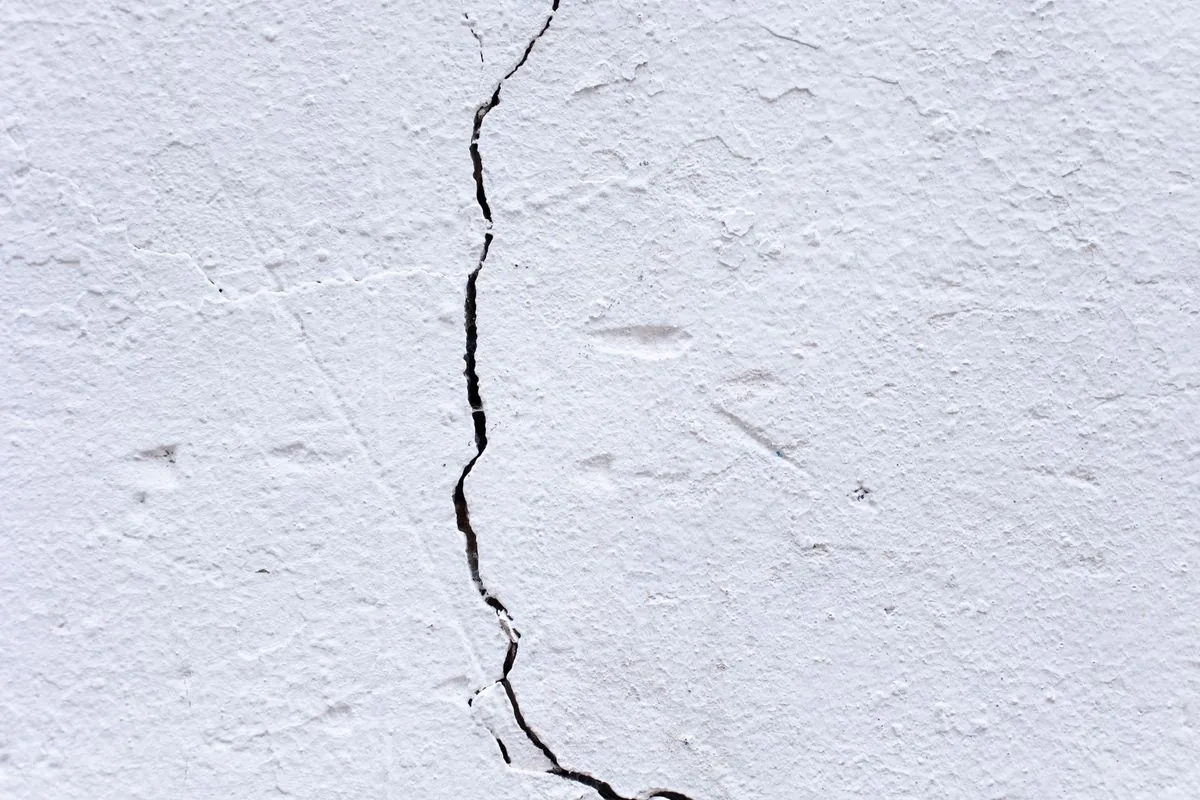
The first question homeowners ask when they see a crack in their stucco is "is this serious?" The answer depends entirely on the type of crack, not just its size. A 1/4-inch map crack across an aging finish coat may be less serious than a 1/16-inch horizontal crack at a consistent height across the wall. Understanding what each crack pattern means helps you make the right call on urgency and repair approach.
Here are the six main stucco crack types seen on Tucson homes, in order from least to most concerning.
Normal thermal cycling — daily expansion and contraction of the stucco surface
Seal with elastomeric caulk before monsoon season. DIY-manageable with the right product.
Hairline cracks are the most common stucco crack in Tucson and the least concerning. They are the natural result of Portland cement's rigid nature meeting the Sonoran Desert's daily thermal swings. You will see them most clearly in the morning before the wall has warmed up. A hairline crack is narrower than a credit card edge. Many Tucson homes develop visible hairline cracks within 5 to 10 years of original stucco application. They do not indicate structural movement and do not require professional repair in most cases.
Differential movement between stiff window frame and surrounding stucco
Have a professional assess width and whether the crack is active or dormant before sealing.
A classic 45-degree crack radiating from a window or door corner is one of the most common stucco problems in Tucson. The window frame moves differently than the surrounding stucco during thermal cycling, and the stress concentrates at the corners. Most of these are cosmetic and stable. The ones to watch are any crack wider than 1/8 inch, any crack that appears to be widening over time, or any crack accompanied by a hollow sound in the surrounding stucco. These may need more than surface sealing.
Settlement, substrate movement, or lath failure; potentially structural
Call a professional. Horizontal cracks across the wall plane may indicate structural movement.
Long horizontal cracks running across a wall surface, especially at consistent heights corresponding to floor lines or ledger attachments, deserve professional evaluation. They can indicate differential settlement between building sections, deflection of framing members under load, or in older homes, failure of the building paper or lath behind the stucco. A horizontal crack that runs continuously for several feet across a wall is not a thermal crack pattern and should not be patched without understanding its cause.
Settlement or movement that follows the masonry joint pattern in CMU or brick substrate
Professional evaluation required. This crack pattern often follows substrate movement.
Stair-step cracks follow a zigzag path along the mortar joints of the underlying substrate. They appear most often on homes built on concrete masonry unit (CMU) or concrete block construction, which is common in Tucson. A stair-step pattern means the stucco is following movement in the block substrate, not cracking independently. The underlying cause may be foundation settlement, soil movement (expansive soil issues are common in parts of Pima County), or framing movement. Address the cause before repairing the surface.
Surface UV degradation, finish coat shrinkage during curing, or underlying coat failure
Superficial map cracking: fog coat or elastomeric recoat. Map cracking with delamination: professional repair.
Map cracking creates an interconnected network of fine cracks across the stucco surface, resembling a road map or alligator skin. Superficial map cracking confined to the finish coat is typically UV and age-related and is addressed by applying a fog coat or elastomeric coating over the entire surface. If the map cracking extends deeper and is accompanied by hollow-sounding areas (tap-test to check), the brown coat has failed and the section needs demolition and rebuilding. Do not simply recoat over delaminated stucco: the coating will eventually separate with the underlying material.
Water infiltration behind the stucco layer; lath corrosion pushing the surface outward
Professional repair required. Delaminated stucco needs demo and rebuild, not surface sealing.
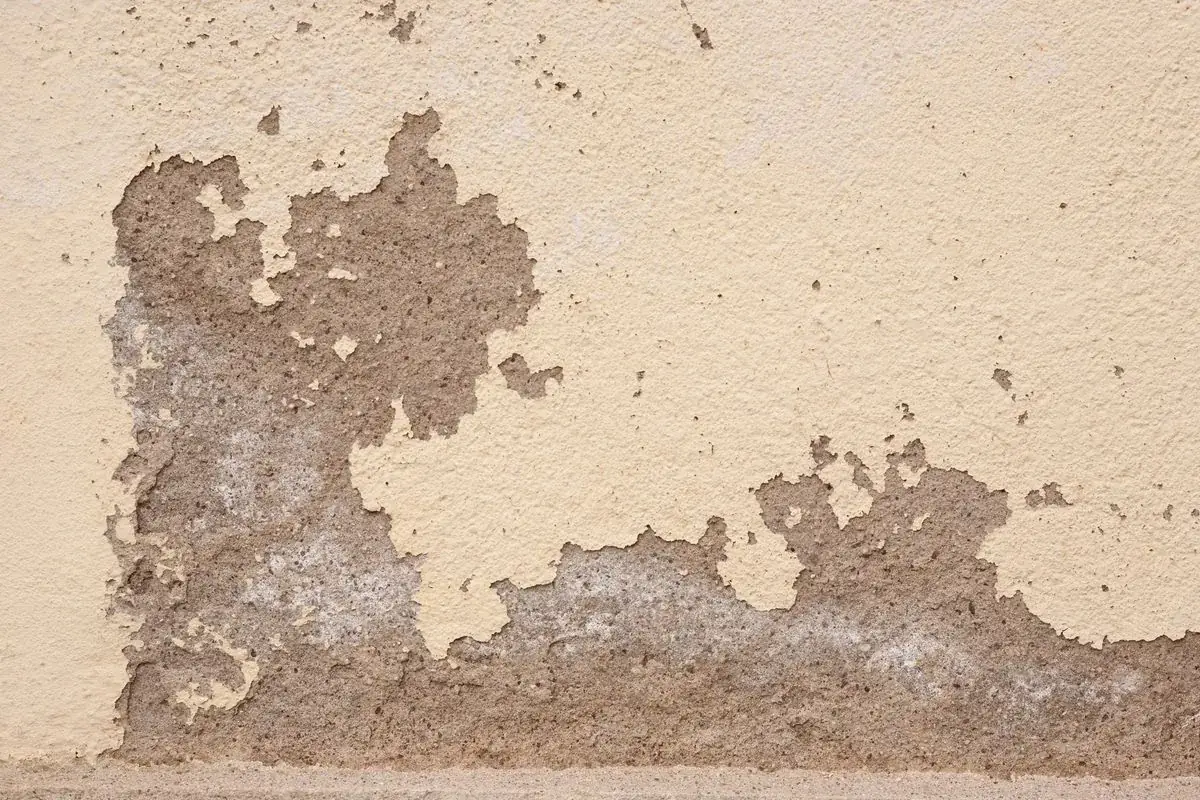
When stucco lifts away from its substrate and forms a visually raised section, the cause is almost always water behind the wall. Water infiltrates through cracks or penetrations, reaches the metal lath, and begins corroding it. Rust expansion pushes the stucco outward. This process happens slowly over years but once visible is typically quite advanced. Bubbled stucco cannot be fixed by pressing it back or covering it with coating. The delaminated section must be removed, the substrate cleaned and repaired, and new stucco applied in the correct sequence of coats.
The Tap Test: Your First Diagnostic Tool
Before you call anyone or buy any product, do a tap test on the area around any crack you find. Use your knuckles or a small rubber mallet, and tap rhythmically across the wall surface, working outward from the crack in all directions.
Bonded stucco makes a solid, slightly dull sound. Delaminated stucco, where the layers have separated due to water or adhesion failure, makes a distinctly hollow sound, like tapping over an air pocket. The hollow area is often larger than the visible crack or damage. If you find hollow areas, the extent of that delamination determines the repair scope more than the crack dimensions alone.
If the tap test reveals a hollow area larger than a dinner plate, or if the crack type is horizontal, stair-step, or accompanies bulging, call a professional before doing anything else. These conditions need diagnosis before repair, not the other way around.
Common Questions
How wide does a stucco crack need to be before I call a professional?
Is map cracking (alligator cracking) serious?
Can diagonal cracks at window corners be structural?
Not Sure What Type of Crack You Have?
We come out, identify the crack type, tap-test the surrounding area, and give you a written quote for exactly what needs to be done. Free, no obligation.
- Free on-site crack diagnosis
- Tap test and full exterior inspection
- Written quote before any work begins
- Licensed and insured in Arizona
- Serving Tucson, Oro Valley, Marana, and Pima County