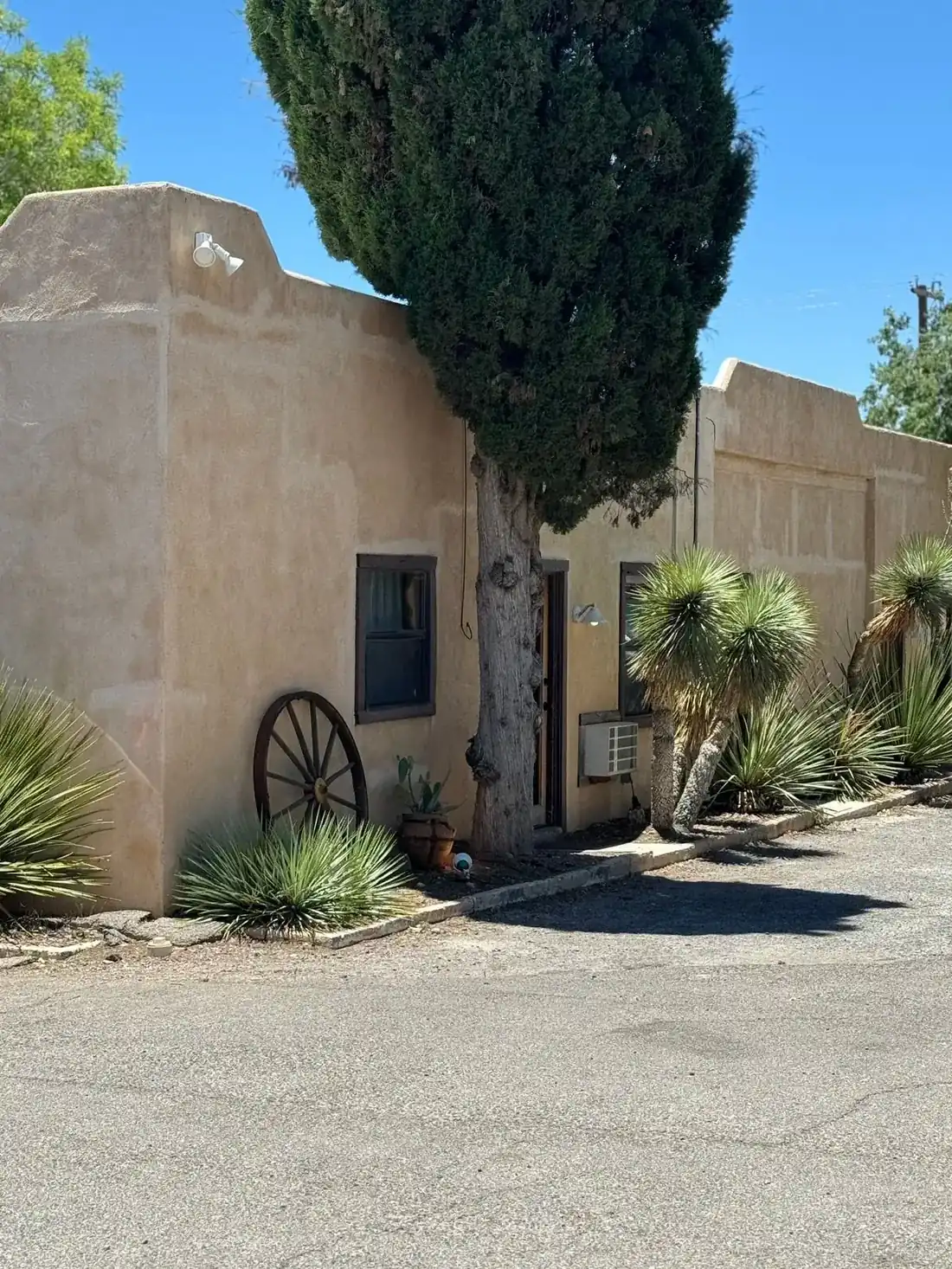
Tucson, AZ • Pima County
Stucco Repair in
Tucson, AZ
Tucson Stucco Repair handles exterior stucco repair in Tucson and Pima County: cracks from desert heat, monsoon leaks and water damage, color-matched patches, re-stucco, stucco painting, adobe and lime plaster, and EIFS.
- Stucco Crack Repair
- Full Re-Stucco
- Plaster Repair
- Color Matching
Stucco Services in Tucson
From hairline cracks to complete re-stucco projects, every scope on Tucson and Pima County properties is covered.
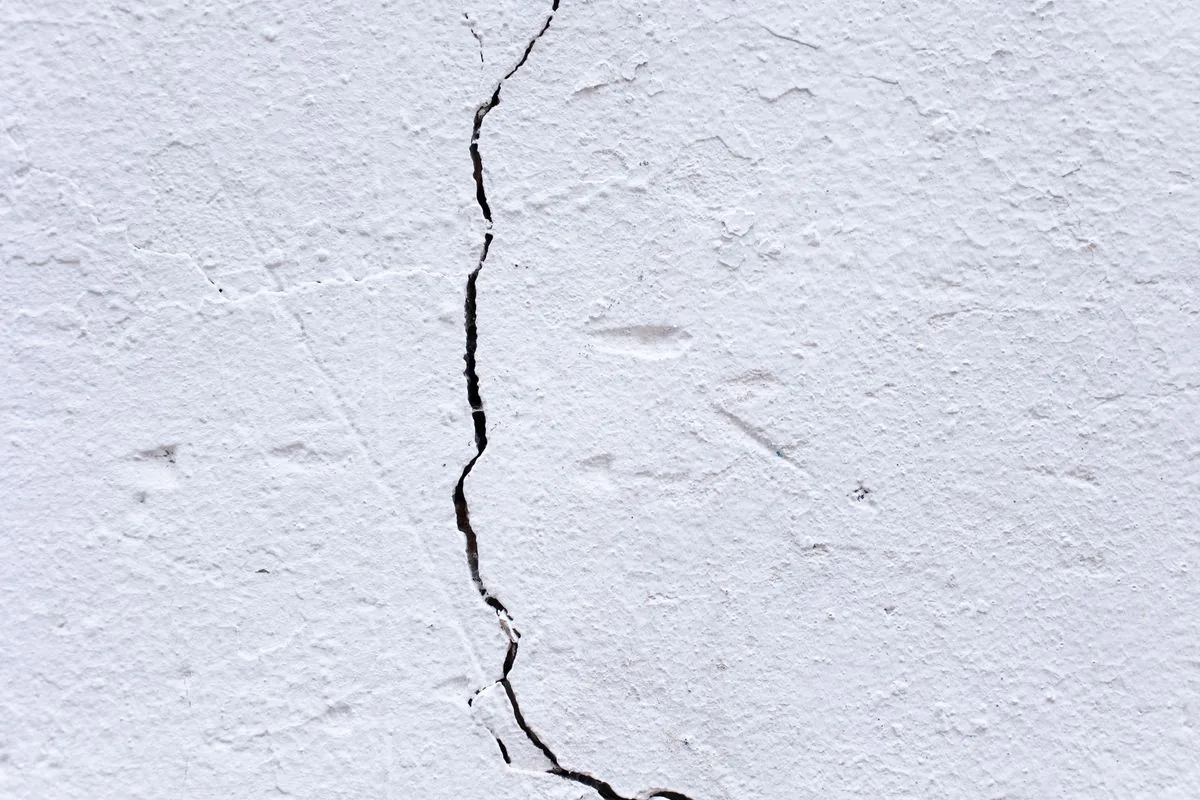
Stucco Crack Repair
Hairline to structural cracks sealed with elastomeric caulk and color-matched patching before monsoon water gets in.
Learn More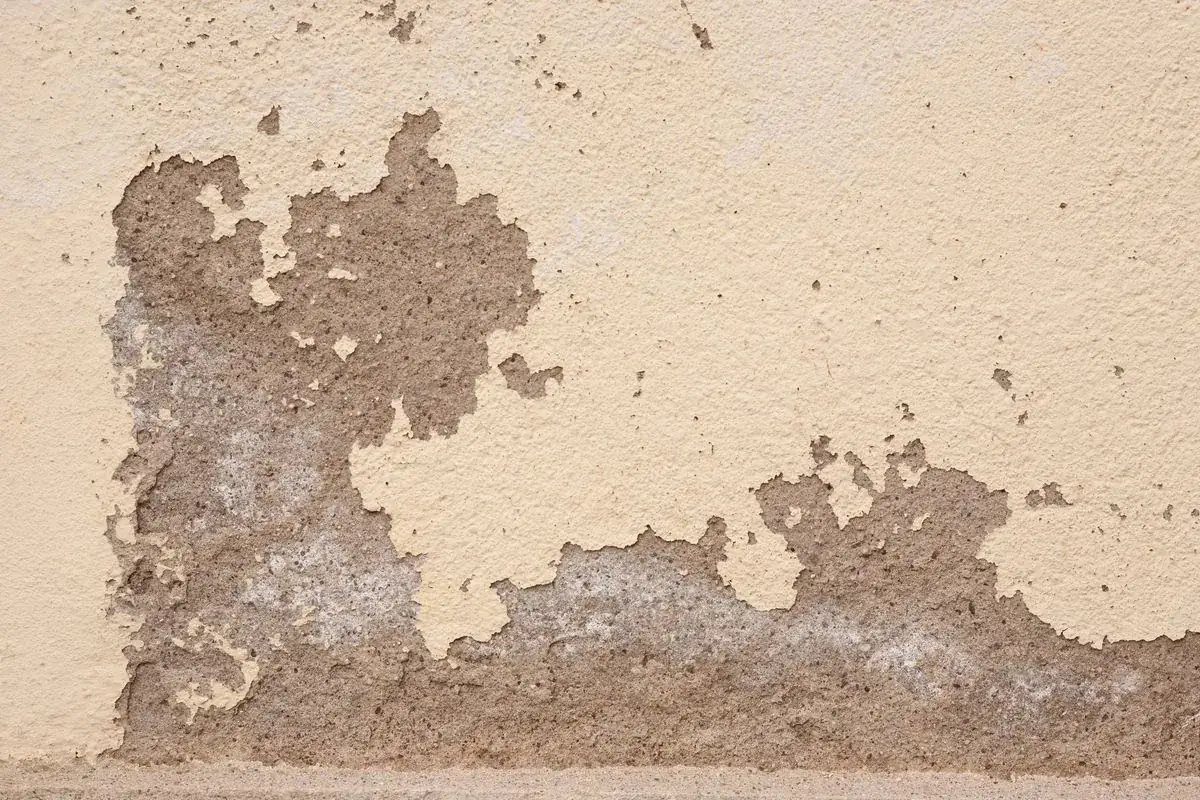
Re-Stucco / Full Replacement
When patching isn't enough, the failing stucco comes off down to the substrate and a full 3-coat system goes back on.
Learn More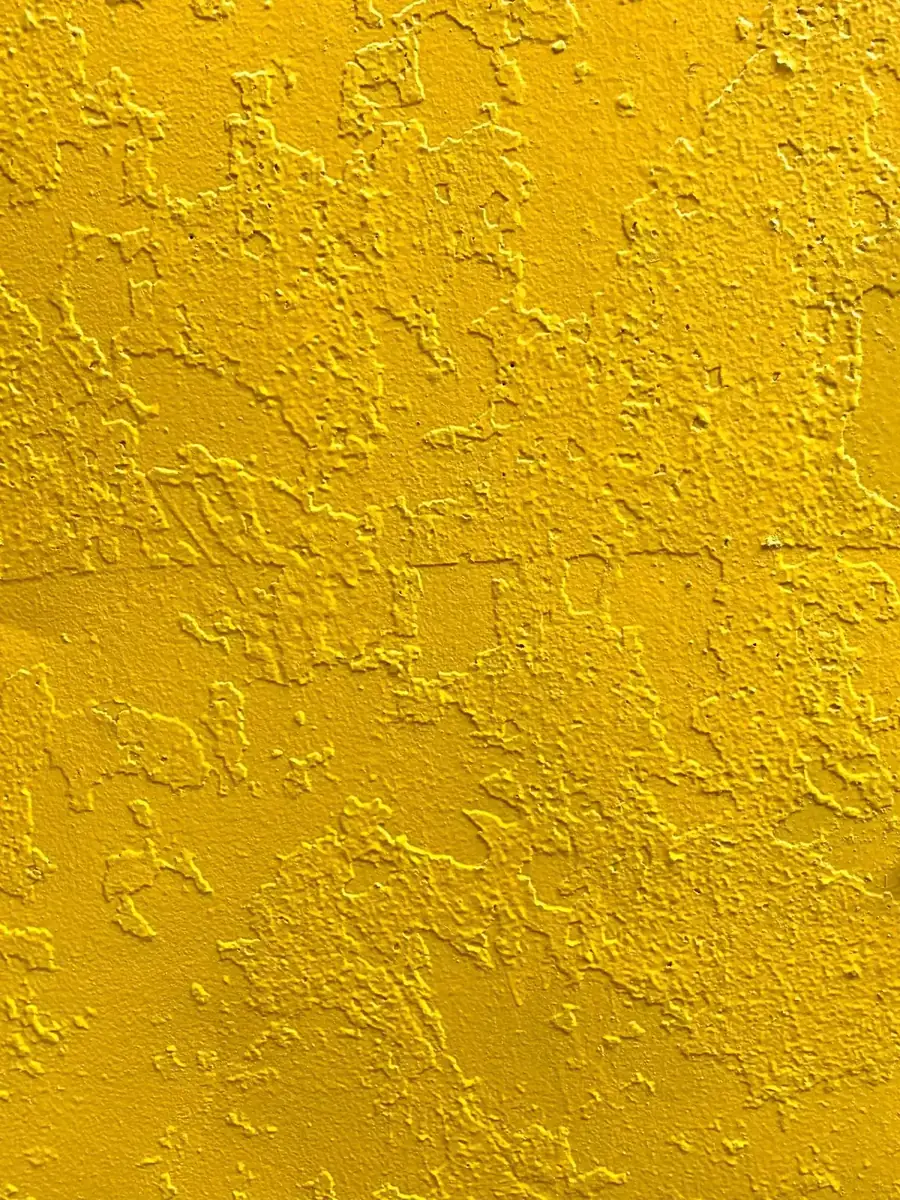
Stucco Painting
Masonry paint, elastomeric coating or a cement fog coat, matched to the wall's texture and your HOA color.
Learn More
Plaster Repair
Interior and exterior plaster patching for historic adobe, territorial, and modern Tucson homes.
Learn More- Stucco Water Damage Repair → Moisture testing, tear-out of wet sections, new paper and lath, and the leak source fixed so the wall stays dry.
- Stucco Repair Around Windows → Diagonal corner cracks, leaks at window heads, foam trim, and the stucco patch after a window replacement.
- Adobe Repair → Mud and stabilized adobe walls, eroded wall bases and the breathable plaster coats older Tucson barrios need.
- Stucco and Drywall Repair → One leak, two walls: the outside stucco and the stained or soft drywall inside, repaired together.
- EIFS / Synthetic Stucco → Repair and remediation of EIFS systems including foam board, base coat, and finish coat replacement.
- Commercial Stucco → Retail centers, offices, apartments and HOA common walls, including EIFS and parapet leaks.
- Stucco Installation → New stucco on additions, casitas, garages, bare block and old wood siding.
Before You Call: What Helps Price a Stucco Repair
Four things a stucco contractor will ask about. Having them ready makes the first conversation shorter and the number closer.
Two photos
One close-up with a coin or tape measure against the crack, one from across the yard. Width and area drive the price more than anything else.
House age and finish
Pre-1960 homes often carry lime plaster, 1980s to 2000s tract homes usually one-coat stucco, and some 1990s homes EIFS. Each is repaired with different materials.
Where the water comes from
Sprinkler overspray, a roof scupper, a parapet cap or a window head. Damage that keeps coming back usually traces to one of these.
Color name or HOA record
If your HOA approved the current color, the color name or paint record saves guesswork on the finish coat.
Exterior Stucco Repair in Tucson: What Each Job Involves
Stucco repair in Tucson means sealing cracks before monsoon water gets in, cutting out delaminated or water-damaged sections, and color-matching the finish so the wall stays watertight. Hairline crack repairs typically run $150 to $400.
Professional repair addresses the cause, not just the symptom. Filling a crack with caulk without understanding why it opened does not solve anything, so every repair starts with an assessment of the full wall condition.
Crack Repair
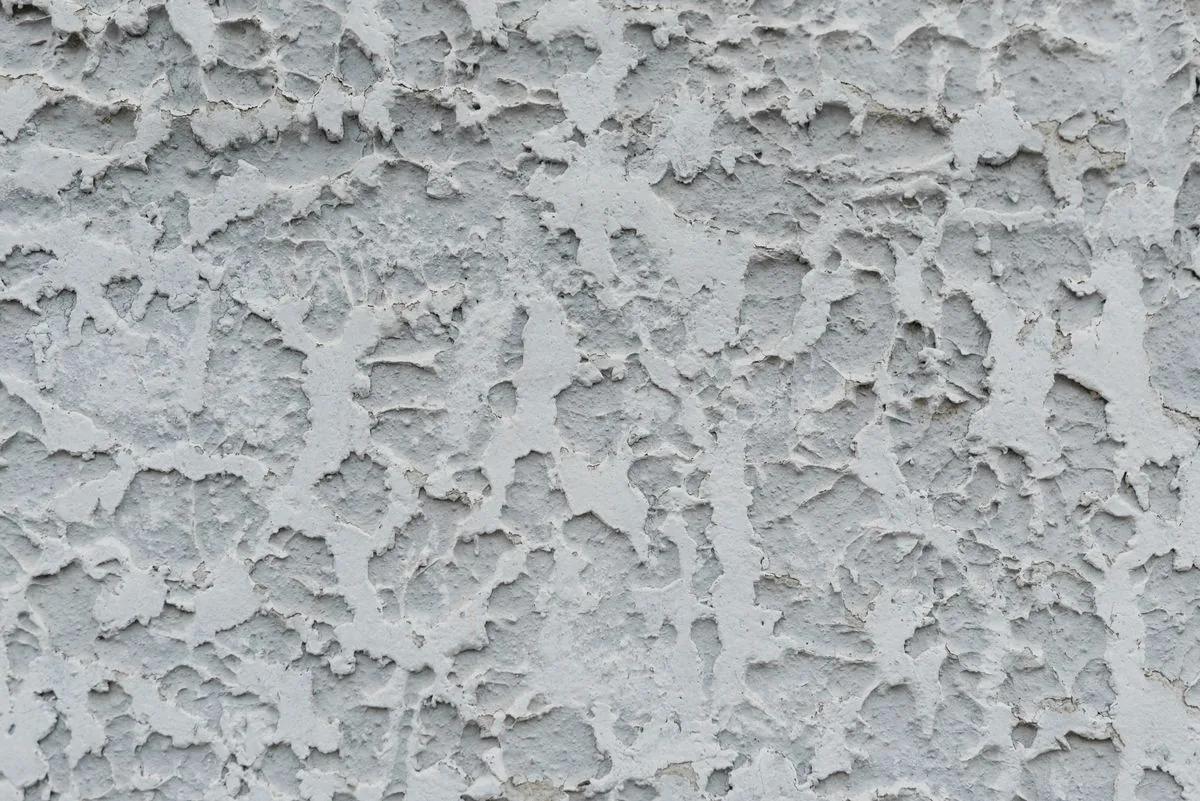
Hairline cracks are the most common stucco repair request in Tucson and the most important to address before monsoon season. A crack that is 1/16 inch wide in June can let in enough water by September to saturate the building paper behind the stucco, leading to mold, wood rot, or sheathing damage. Structural cracks are routed and sealed, movement cracks get elastomeric filler, and a finish coat is feathered in to match the surrounding texture. See our stucco crack repair guide for crack types and methods.
Delamination Repair
Delamination is when the finish coat or brown coat separates from the layer below. Tapping the wall finds it: a hollow sound means the bond has failed, and that section will eventually crack, buckle, or fall away. The compromised section is cut back to a solid edge, the substrate cleaned and primed, and the layers rebuilt in the correct sequence.
Water Damage Repair
Monsoon-driven water finds its way through cracks, failed control joints, and compromised window or door penetrations. Once moisture gets behind the stucco system it can damage the building paper, corrode wire lath, and rot the framing. Scope depends on how far the moisture has traveled and whether the lath or sheathing is affected. All compromised material comes out, the assembly dries, and it is rebuilt with new building paper and lath before fresh coats go on. Our stucco water damage repair page covers moisture testing and tear-out in detail, and stucco repair around windows covers the most common leak point.
Re-Coat and Fog Coat
When the stucco is structurally intact but the finish has faded, chalked, or gone uneven from UV exposure, a fog coat or re-coat is often the right fix. A fog coat is a thin cement slurry that restores color and seals the surface without adding thickness, and works well on sand or dash finishes whose texture is still good. A re-coat applies a new color coat over the existing base for more coverage and texture refinement. Both cost less than full re-stucco. More on color matching and exterior coatings.
Section Replacement
When a whole wall section has failed from impact, prolonged water exposure, or age, the perimeter is cut to a clean edge, material removed down to the substrate, new wire lath installed, and a full three-coat sequence applied: scratch coat, brown coat, and finish coat. A fog coat over the full wall face blends the patch visually. If most of the exterior is failing, full re-stucco is usually the better investment.
Stucco Repair Built for Tucson's Climate
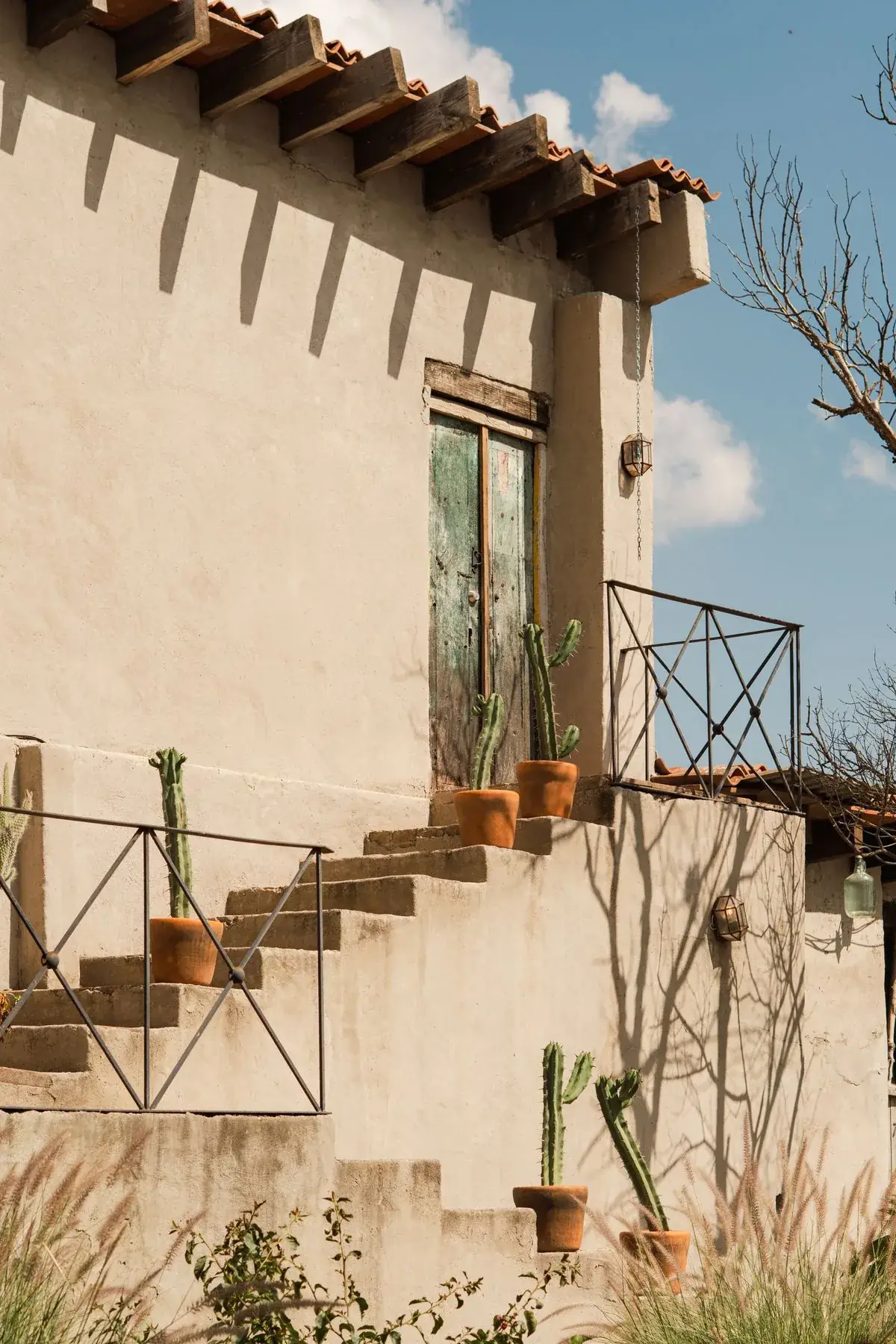
Tucson stucco faces stresses that other climates don't. The city averages 158 days a year at 90 degrees F or hotter, and the monsoon delivers more than half the year's rain in a few weeks of hard storms after months of bone-dry conditions. That thermal cycling and moisture cycle is hard on stucco, especially on properties with older three-coat systems or EIFS installations from the 1990s and early 2000s.
Repairs cover traditional three-coat stucco, one-coat systems, EIFS, and historic lime plaster. Older Tucson homes, territorial-era buildings, and adobe structures each have their own substrate requirements. What's under the surface gets assessed before anyone picks up a trowel.
Why Stucco Fails in Tucson: Five Local Causes
Almost every stucco repair in Tucson traces back to one of five things: monsoon water getting behind the wall, daily heat swings opening cracks, the wrong coating on the wall, a patch that doesn't match in desert sun, or a modern material put on an old adobe or lime-plastered house. The numbers below are the local climate those walls live in.
| Tucson figure | Value | What it does to stucco |
|---|---|---|
| Normal monsoon rain | 6.06 in of 10.61 in a year (about 57%) | More than half the year's water arrives in a few weeks of hard storms, on walls that have been dry for months. |
| First monsoon storms | Around July 3 on average | Cracks that opened in spring take on water before most people notice them. |
| June average high / low | 101.2 F / 71.1 F | A daily swing of about 30 degrees: the wall expands and shrinks every day, and cracks keep moving. |
| Days at 90 F or hotter | 158 a year | Patches and coats dry fast in heat and sun, which weakens the cure if they're not kept damp. |
| Record high / low | 117 F (1990) / 6 F (1913) | Rare extremes; the everyday swing above does more of the cracking. |
Sources: National Weather Service normals for Tucson International Airport, as published in Wikipedia's Tucson, Arizona and North American monsoon articles. The percentages and the daily swing are our arithmetic from those figures.
1. Monsoon Water Intrusion
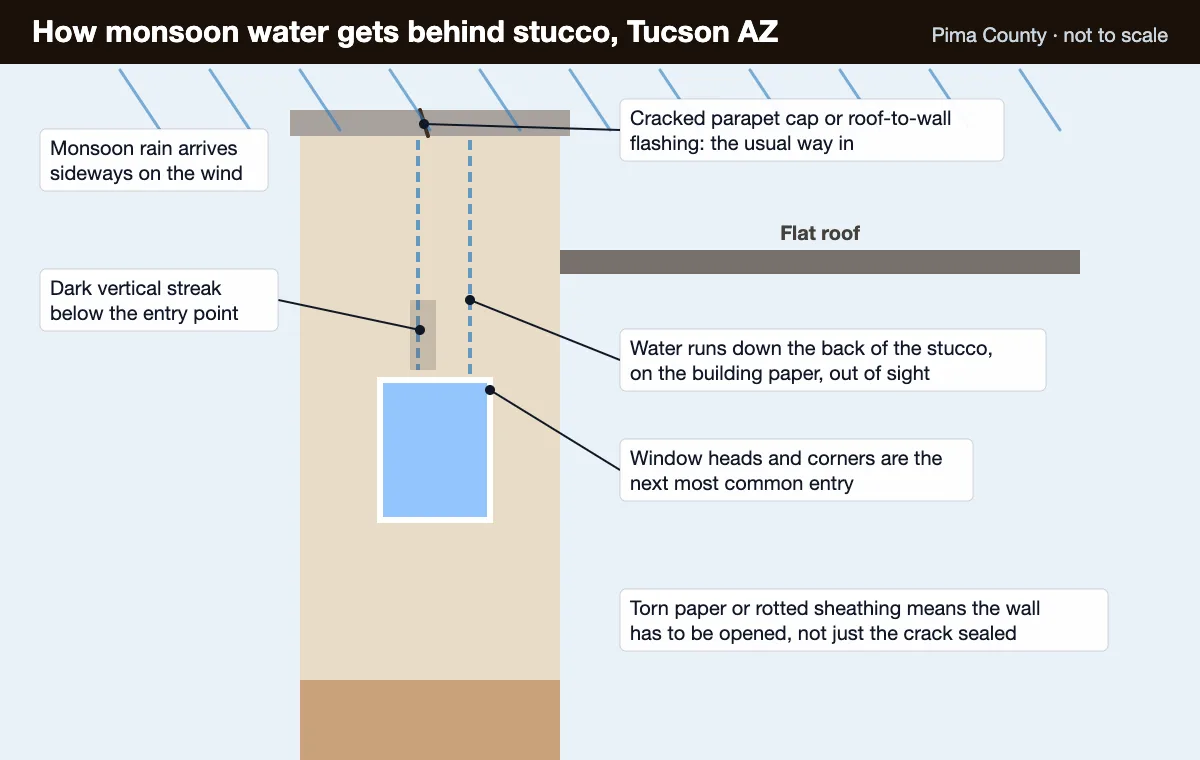
Water is the first cause of stucco damage in Tucson, and the monsoon is when it arrives. The National Park Service's stucco preservation brief calls stucco "particularly susceptible to water damage" and lists the usual entry routes: leaking gutters and downspouts, ground settlement around doors and windows, plants against the wall, and ground water rising into the wall base where drainage is poor. In Tucson add roof scuppers, parapet caps and sprinklers that hit the wall every morning. Water that gets past the stucco runs down the building paper and shows up as a stain or a soft, hollow-sounding patch well below where it got in, so the repair starts at the source, not at the stain.
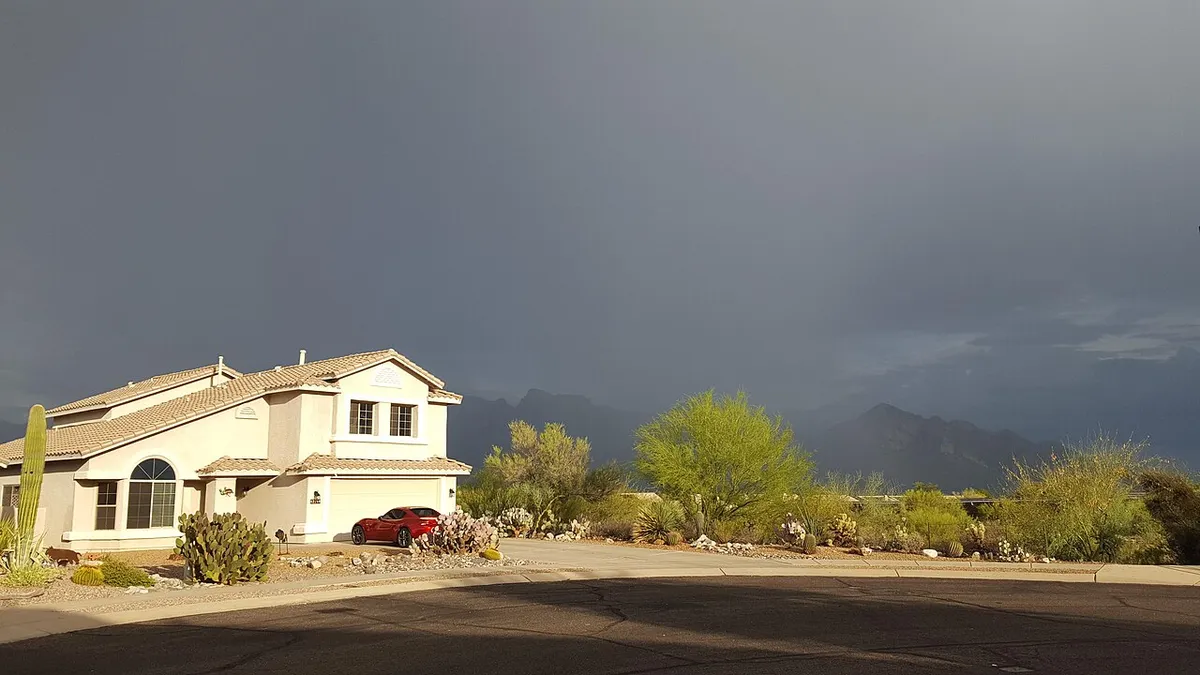
If a wall is already wet behind the stucco, patching the face won't fix it. See stucco water damage repair for moisture testing and tear-out, stucco repair around windows for the most common leak point, and the monsoon stucco damage guide for a post-storm checklist.
See how monsoon water gets behind stucco (diagram)
2. Desert Heat Cycling Cracks
Tucson walls heat and cool by about 30 degrees every summer day: the June average runs from 101 F in the afternoon to 71 F before dawn, and the city averages 158 days a year at 90 F or hotter. Portland cement stucco is rigid, so that daily movement concentrates at corners, window and door edges and old patches, and the same crack reopens in the same place each year. Where a house has both old lime plaster and newer cement stucco, the National Park Service notes the two expand and contract at different rates, which will normally crack the wall where they meet.
That's why a crack that keeps moving gets a flexible sealant and a matched finish, not a hard cement fill, and why repairs are best scheduled for the cooler months: plaster sets faster in hot, dry, sunny conditions, and a coat that dries too fast cures weak. Crack widths and methods are on the stucco crack repair page.
3. Elastomeric vs Acrylic Finish
"Elastomeric or acrylic" is less of a choice than it sounds: most elastomeric wall coatings are acrylic too. Sika's SikaWall line of stucco products lists its smooth elastomeric coating and its textured elastomeric finish as 100% acrylic-based. The real difference is thickness and stretch. A standard acrylic masonry paint is a thin film; an elastomeric coat is a thick, stretchy film meant to flex over hairline cracks; an acrylic finish coat is a textured, trowel-applied layer; a cement fog coat is a thin slurry of cement and pigment that bonds into the stucco itself.
- Match what's already on the wall. The NPS brief's first rule for recoating is that the new coat must be compatible with any coating already there.
- Let new stucco cure. At least 28 days before paint, with the wall around 4 to 6% moisture or less. A 2 by 2 foot plastic sheet taped to the wall for 24 hours shows whether it's still damp.
- Don't seal in a wet wall. A thick film over stucco that already has water behind it hides the problem; fix the leak first.
Painting a stucco house runs $2.45 to $4.75 per square foot of wall (Homewyse, May 2026). The full comparison of fog coat, elastomeric and acrylic, with prices by wall area, is on stucco painting and color matching.
4. Color Matching in Desert Sun
A stucco patch rarely matches on the first try, and Tucson sun makes the difference obvious. The NPS brief explains why: stucco color comes mostly from the sand, the amount of water in the mix changes the dried color, and overmixing a tinted mix can discolor it. Its advice is to let test samples weather through a change of seasons, ideally a year, before judging the match.
The practical rule from the same brief: a hand-mixed color is usually close enough for a whole wall or a clearly separate area, but not for a small patch in the middle of the front of the house. There, the answer is to color coat or paint the whole patched wall, ending at a corner or other break. And caulk in a hairline crack collects dirt and stands out within a year, so a crack on a visible wall is better filled with a slurry of the finish-coat material. If your HOA approved the current color, have the color name ready; it saves a round of samples.
5. Adobe and Historic Homes
Older Tucson houses need different materials, and the wrong one does damage. Until the late 1800s stucco was mostly lime; after about 1900 most was portland cement, with no exact cut-off date. Rigid cement patches on soft lime stucco crack and pull away. On unstabilized adobe it's worse: the NPS adobe brief notes that cement stucco doesn't bond to the brick at all, hangs on wire and nails that rust, and expands 3 to 10 times as much as the adobe with heat, so it cracks, lets water in and then keeps the wall from drying.
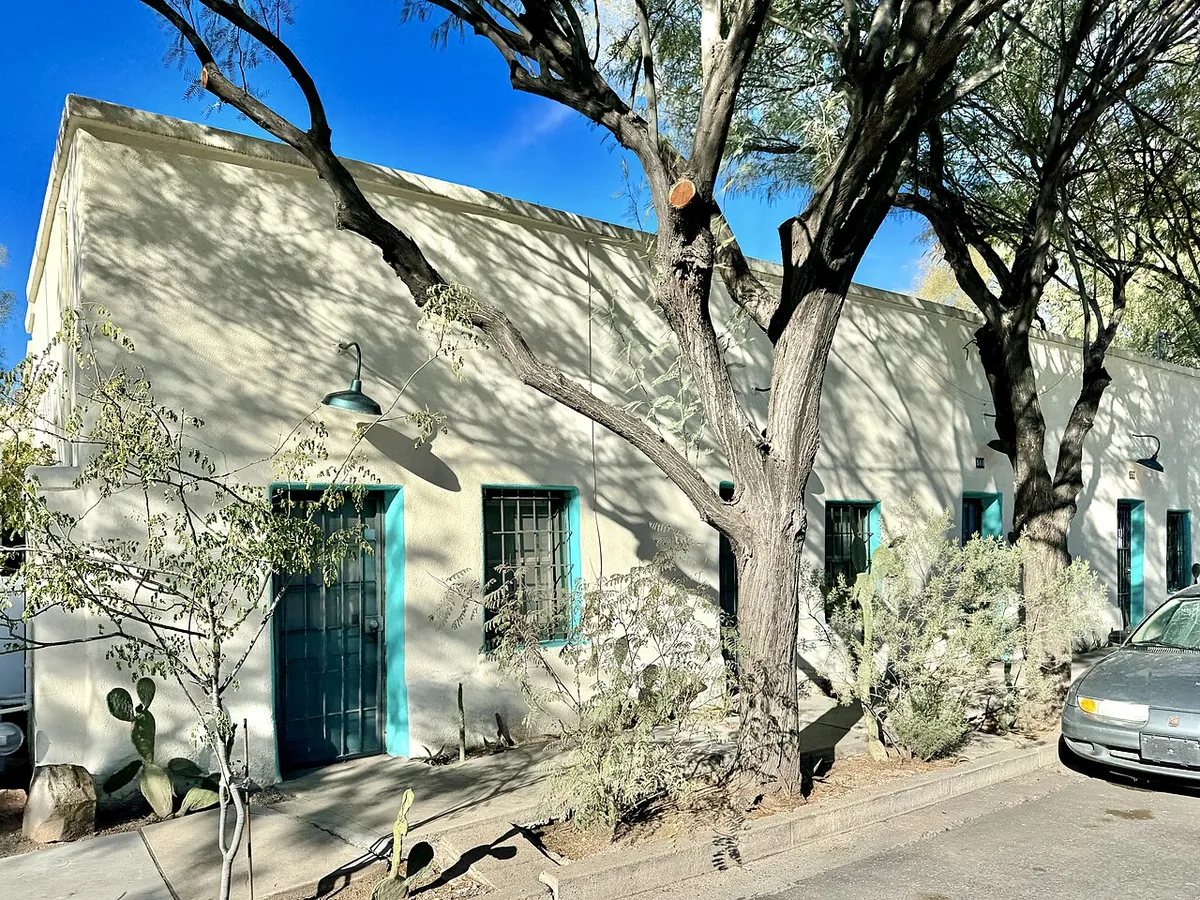
In the city's Historic Preservation Zones (Barrio Historico, El Presidio, Armory Park, West University, Fort Lowell), spot patching needs no historic review, but replacing stucco or plaster is minor review, typically 6 to 8 weeks. More on historic stucco restoration, adobe repair and lime plaster repair.
How Much Does Stucco Repair Cost in Tucson?
See how a three-coat stucco wall is built (diagram)
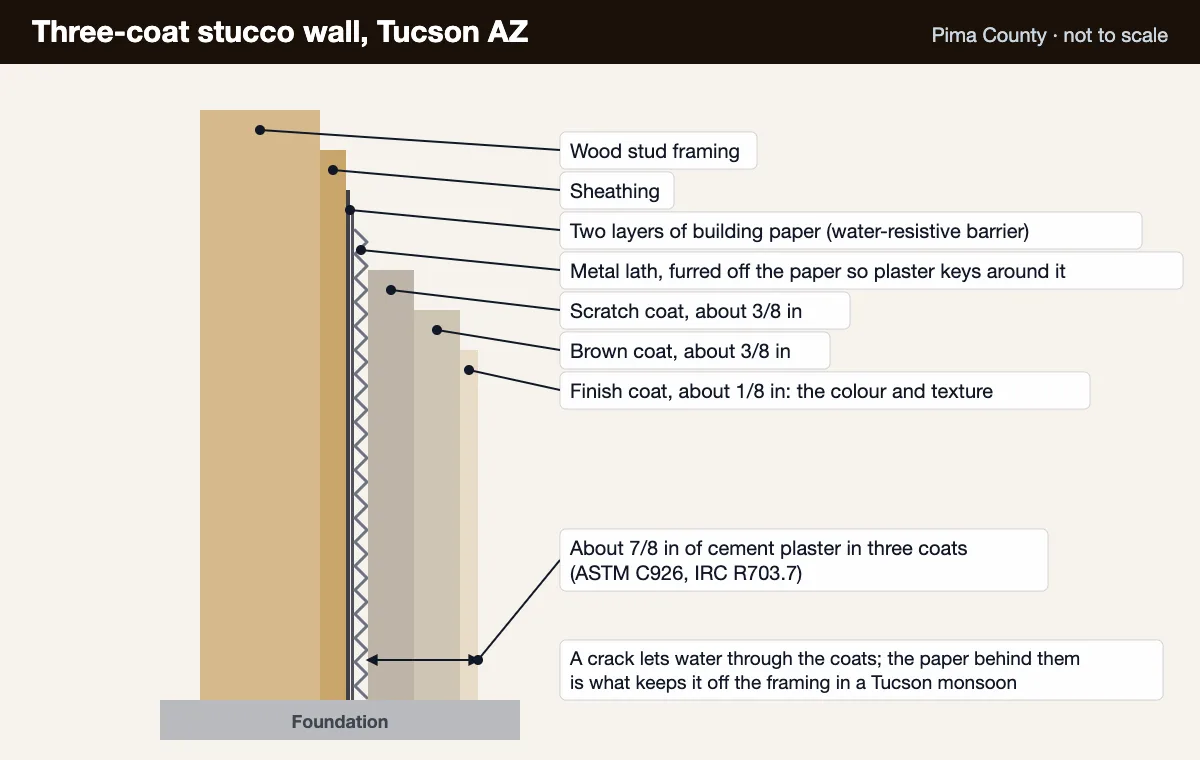
Most Tucson stucco repairs fall between $150 for a hairline crack and $3,000 for contained water damage, while full re-stucco on a single-family home starts around $8,000 to $12,000. Cost depends on the type of damage, the size of the affected area, and the coating system on the home; the exact figure depends on what the wall shows once it has been seen.
| Repair Type | Typical Range |
|---|---|
| Hairline crack repair | $150 to $400 |
| Delamination patch (contained area) | $400 to $900 |
| Water damage repair | $900 to $3,000 |
| Stucco painting (per sq ft of wall, Homewyse 2026) | $2.45 to $4.75 |
| Full re-stucco (single-family home) | $8,000 to $12,000+ |
Residential and Commercial Stucco in Tucson
Residential Stucco Repair
Most requests are houses: a crack that reopened after the monsoon, a patch that never matched, a wall base kept wet by sprinklers, or a window replacement that left a raw edge in the stucco. Homes here run from pre-1960 lime plaster and adobe to one-coat tract stucco and 1990s EIFS, and each takes different materials, which is why the house's age is the first question.
Commercial Stucco
Retail centers, offices, apartment buildings and HOA common walls are a separate kind of job: bigger wall areas, parapets on flat roofs, acrylic finish systems and work scheduled around tenants. See commercial stucco contractor in Tucson for what those projects involve.
Hiring Stucco Contractors in Tucson: What to Check
In Arizona, stucco work is licensed by the Registrar of Contractors under the Plastering classification: R-36 for residential work and C-36 for commercial, both covering lath and trowel or spray coats of stucco, cement and gypsum plaster (Ariz. Admin. Code R4-9-102 and R4-9-103). Drywall is a different class (R-10), and painting another (R-34), which matters on a job that crosses from the stucco to the inside wall or the paint. Look the license number up on the ROC site before you sign anything, and check that the class matches the work.
Before comparing prices, make sure the bids describe the same job: which system goes back on (three-coat, one-coat or EIFS), whether the patch is texture and color matched or only filled, and whether a permit is part of it. Our Pima County stucco permit guide covers when one applies.
Serving Tucson and Pima County
We cover Tucson proper and the communities around it in Pima County, from the Catalina Foothills and Casas Adobes in the north to Sahuarita, Vail and Rita Ranch in the south and east. Two towns have their own pages because people there search for stucco repair by name: stucco repair in Oro Valley and stucco repair in Green Valley.
Stucco Resources for Tucson Homeowners
Understand your repair before you commit. These guides cover Tucson pricing, Pima County permits, and monsoon prep.
Stucco Repair Cost Guide
Typical price ranges for crack repair, patching, and full re-stucco in Tucson. What drives costs up, and where you can save.
Read Cost GuidePima County Permit Guide
Do you need a permit for stucco repair in Pima County? When the county requires one, how to apply, and what inspectors look for.
Read Permit GuideMonsoon Stucco Damage
What to inspect after Tucson's monsoon season, which damage types are urgent vs. cosmetic, and how to prepare before summer rains.
Read Monsoon GuideTucson Stucco Repair: Frequently Asked Questions
How much does stucco repair cost in Tucson?
Can I do stucco repair myself?
When is the best time of year for stucco work in Tucson?
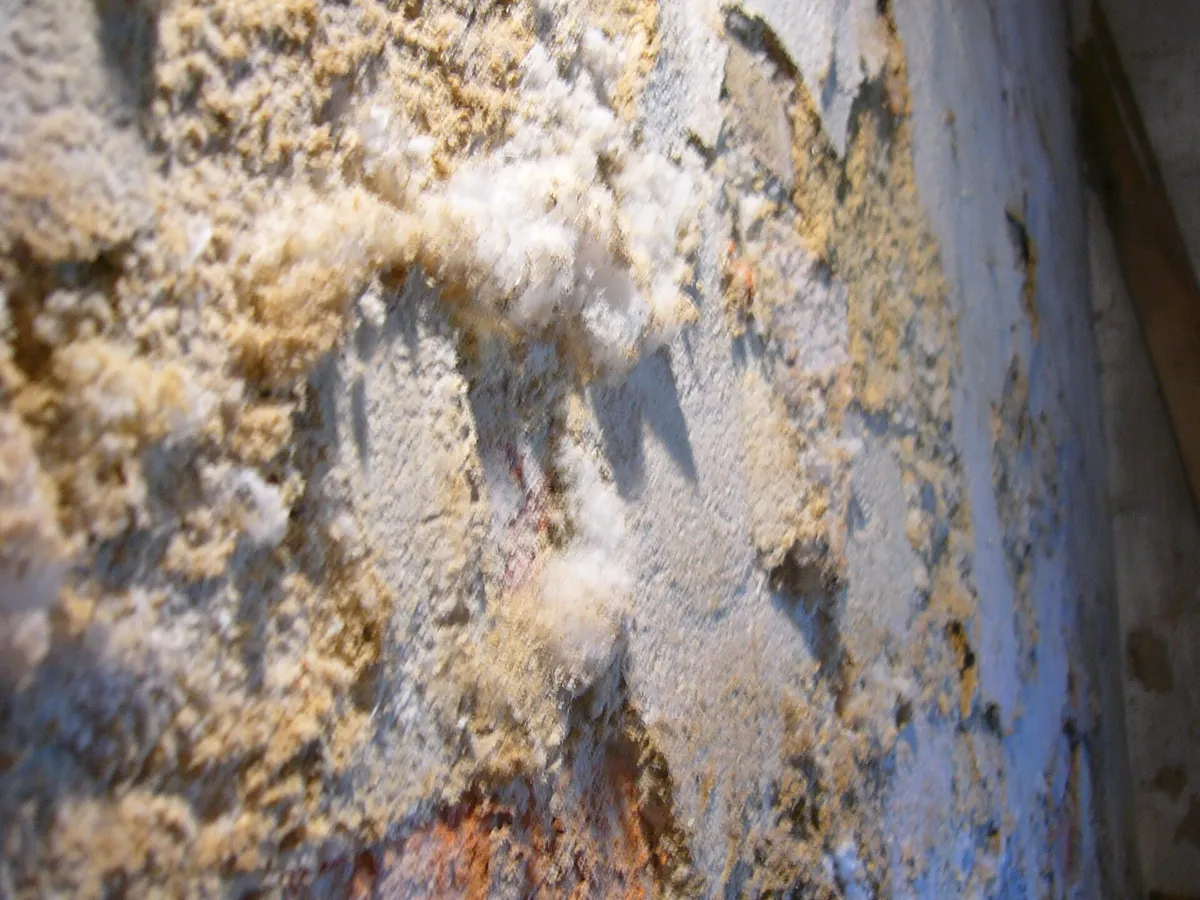
What causes white chalky stains on Tucson stucco?
My stucco has cracks after the summer monsoons. What should I do?
Does stucco repair require a permit in Pima County?
How long does stucco repair take?
Can you match the existing stucco texture and color?
Can EIFS and synthetic stucco be repaired?
Get a Free Stucco Estimate in Tucson
We cover Tucson, Oro Valley, Marana, Sahuarita, Green Valley, and surrounding Pima County communities. No obligation.