Plaster Repair in Tucson, AZ
Tucson has one of the most significant concentrations of historic adobe architecture in the American Southwest. From the narrow lanes of Barrio Viejo to the bungalows of Sam Hughes, thousands of homes in this city were built with adobe brick and finished with traditional lime plaster. That plaster is not the same material as the portland cement stucco on a house built in 1990, and repairing it requires a different approach. Using the wrong material in the wrong ratio creates a rigid patch in a flexible wall, and that patch will crack again within a season.
We repair all types of plaster found in Tucson and Pima County: traditional lime plaster on historic adobe and wood-lath construction, gypsum plaster on interior walls, and portland cement plaster on modern exteriors. Whether your home is a territorial-era adobe in Barrio Historico or a 1970s ranch house with interior plaster ceilings, the starting point is the same. Identify the existing material, assess the substrate, and match the repair to what is already there.
Plaster repair in Tucson is also a pre-monsoon maintenance priority. Tucson's monsoon season runs from June 15 through September 30. Any compromised section of plaster, indoors or outdoors, that admits moisture during that window can lead to spalling, mold growth behind the wall, and damage to the adobe or wood lath behind. We provide free written estimates and recommend scheduling assessments in April or May so repairs are complete before the rains arrive.
Types of Plaster We Repair in Tucson
Lime Plaster on Historic Adobe and Wood Lath
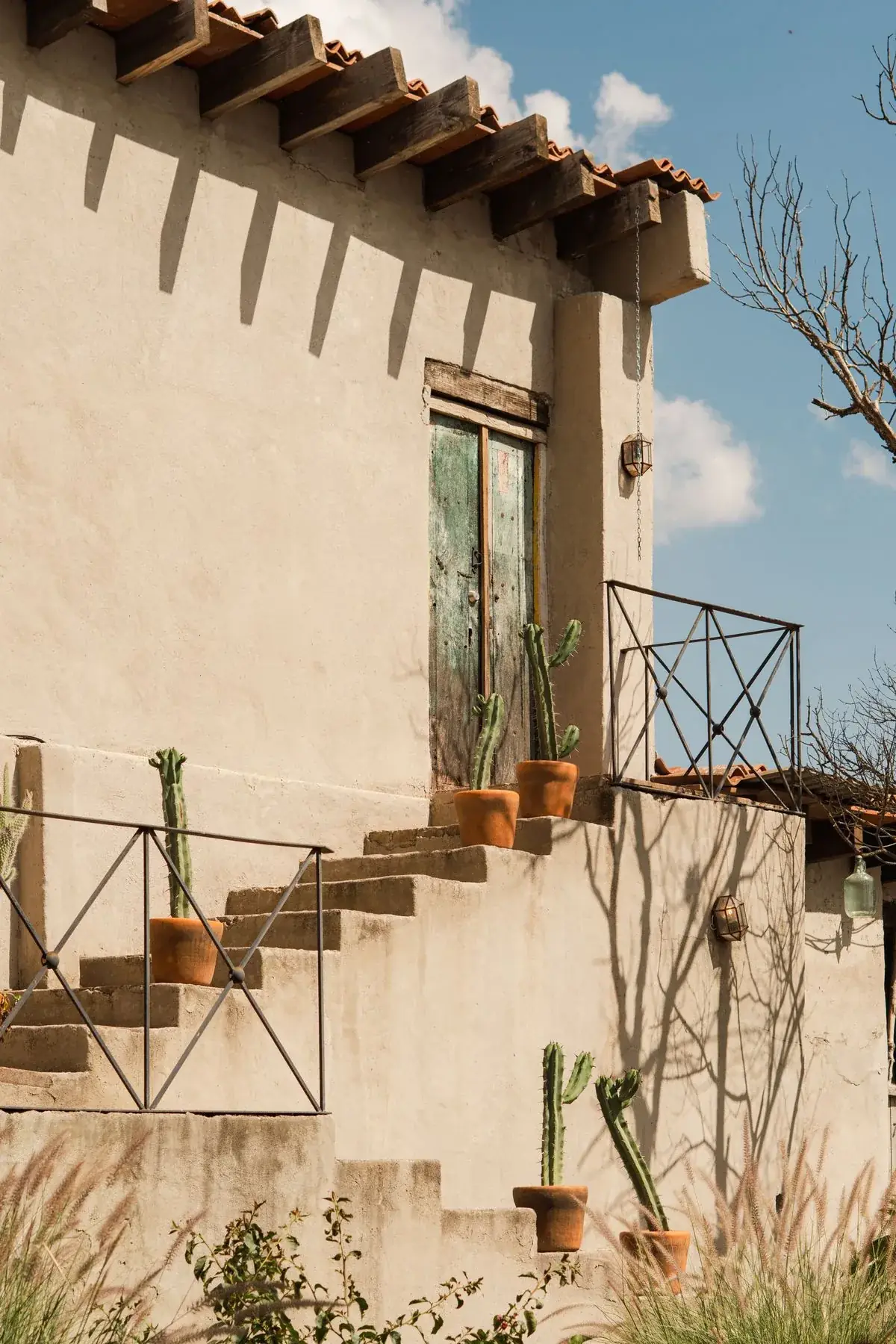
Lime plaster is the original coating material used on adobe brick construction in Tucson and across the Southwest. It is made from lime putty or hydraulic lime mixed with sand and sometimes animal hair or fiber for tensile strength. Historic homes in Barrio Historico, Barrio Viejo, Armory Park, and Sam Hughes often have original lime plaster that has been in place for 80 to 120 years. The material is more flexible and more breathable than portland cement, which makes it well suited to adobe walls that expand and contract with seasonal humidity changes.
Lime plaster repair requires matching the binder type. Patching with a portland cement mix creates a rigid island in a flexible wall, and that patch will crack at its edges within one or two monsoon cycles. We use lime-based mixes, sometimes blended with small amounts of white portland cement for working time, and apply the repair in the same layer sequence as the original: scratch coat, brown coat, and finish coat. Color and texture matching on aged lime plaster takes skill. Lime finishes that have been exposed to decades of Tucson sun develop a character that cannot be replicated exactly, but we get as close as the material allows.
Gypsum Plaster on Interior Walls and Ceilings
Many Tucson homes built between 1940 and 1980 have gypsum plaster on interior walls and ceilings rather than modern drywall. Gypsum plaster is applied over metal lath or gypsum board in two or three coats and produces a harder, denser surface than drywall compound. Common issues include shrinkage cracks from the original drying process, settlement cracks as foundations shift in Pima County soils, and spalling sections where moisture has cycled behind the plaster from a roof leak or plumbing event. Interior plaster patches run $200 to $600 for typical repairs. Larger areas with significant lath damage or ceiling sections that have detached require more extensive work and are quoted on-site.
Portland Cement Plaster (Exterior Stucco)
Portland cement plaster is the same material most people call stucco. It is the standard exterior wall coating on Tucson homes built after the 1960s, applied in a three-coat system over metal lath and building paper. In older neighborhoods, portland cement plaster was also applied directly over adobe brick as a modernization coating, which creates its own repair challenges: the cement coating is rigid, the adobe behind is flexible, and cracks along the interface are nearly inevitable over time. Exterior plaster work on a standard section typically runs $400 to $1,200. Larger historic repairs on homes where the cement coating is failing over adobe are quoted per job after an on-site assessment.
Stucco Over Adobe: A Common Tucson Challenge
Throughout Tucson's older neighborhoods, it is common to find historic adobe walls that have been coated with portland cement stucco at some point in the 20th century. This was done to modernize the appearance and protect the adobe from water. The problem is that portland cement and adobe have very different movement characteristics. Over time, cracks form along the interface, moisture gets behind the cement shell, and sections of stucco begin to delaminate from the adobe below. Repairing this situation requires removing all failed cement plaster back to solid adobe, allowing the adobe to dry fully, and then re-plastering with a more compatible material: typically a lime-portland blend that is flexible enough to move with the adobe without cracking on the first thermal cycle.
Common Plaster Problems in Tucson Homes
Shrinkage Cracks
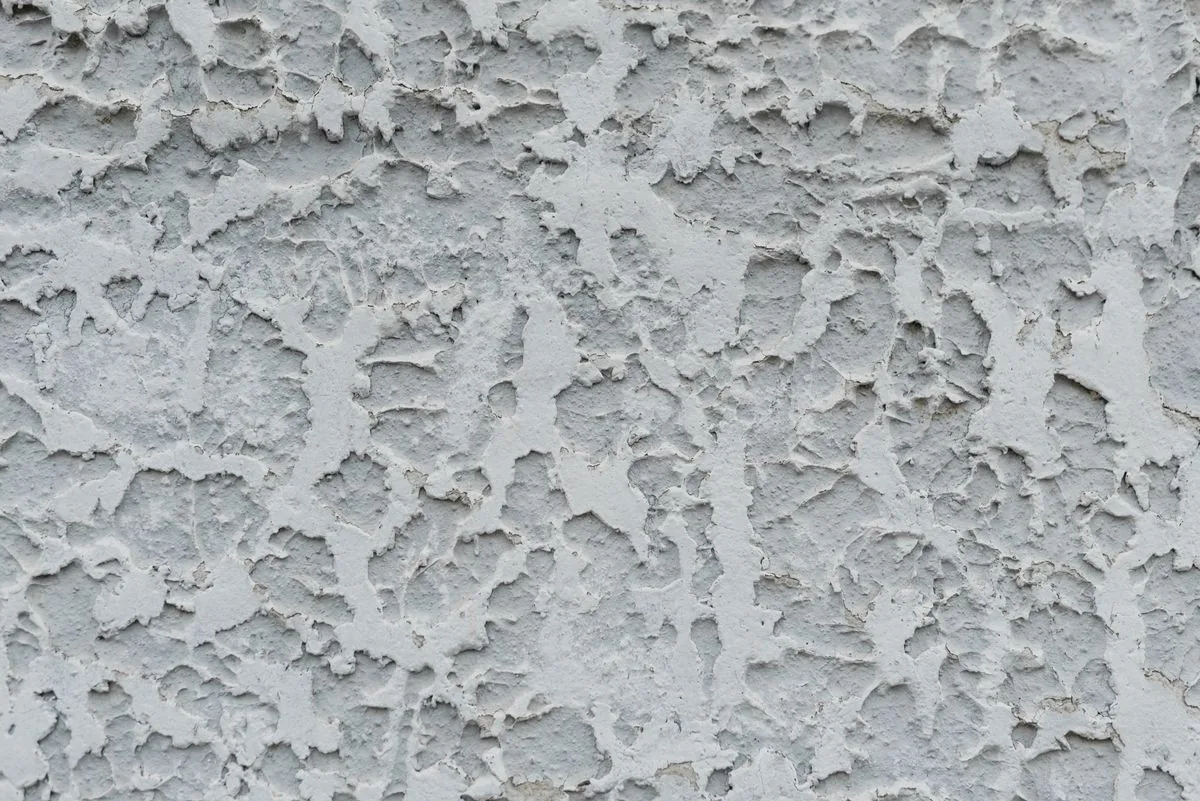
Shrinkage cracks appear during the original drying process of any plaster coat and are common on both historic lime plaster and modern portland cement stucco. Fine map cracking, also called crazing, is a network of tiny surface cracks that looks like crackled glaze on pottery. By itself, crazing is cosmetic and does not indicate structural failure. Wider shrinkage cracks, 1/16 inch or more, may admit water and should be sealed before Tucson's monsoon season. We clean the crack, apply a compatible filler, and feather in a finish coat to match the surrounding texture.
Settlement Cracks from Foundation Movement
Tucson's caliche-rich soils and the expansive clay content in parts of Pima County cause foundation settlement that transmits directly to exterior and interior plaster. Settlement cracks are typically diagonal and appear at the corners of window and door openings, where stress concentrates when the building moves. A crack that follows the same diagonal path year after year is almost certainly driven by ongoing foundation movement and will reopen after any surface repair unless the underlying movement is addressed. We distinguish between active and stabilized settlement cracks before recommending a repair approach, and we are direct with homeowners when a structural engineer consultation would be more appropriate than a plaster repair.
Spalling Where Moisture Has Cycled
Spalling is what happens when repeated moisture cycling causes the bond between plaster coats to fail. On exterior walls, monsoon water that gets behind the plaster through a crack or failed flashing can expand and contract as temperatures swing, pushing sections of plaster away from the wall over several seasons. On interior walls, spalling often traces back to a roof leak or plumbing event that saturated the plaster from behind. Spalling repairs involve removing all loose material back to a sound edge, allowing the substrate to dry fully, and rebuilding from the scratch coat out.
Missing Sections on Old Adobe Buildings
Older adobe buildings in Tucson's historic neighborhoods sometimes have sections where the original plaster has simply fallen away over decades of weathering, leaving bare adobe brick exposed. Exposed adobe weathers quickly: Tucson's monsoon rains can erode unprotected adobe at a rate that does visible damage within one season. When we encounter missing plaster on an adobe wall, the priority is first to assess the condition of the exposed adobe and let it dry thoroughly if it has been recently wetted. Then we clean the surface, apply a bonding treatment compatible with the adobe, and rebuild the plaster coats in the correct sequence. Color matching on old adobe buildings is discussed with the owner before work begins.
Historic Tucson Neighborhoods with Adobe and Lime Plaster
Tucson has more intact pre-1900 adobe construction than almost any other American city. Several historic neighborhoods are particularly concentrated with homes that have original or early-20th-century lime plaster. Work in these areas requires an understanding of the original materials and, in some cases, consultation with the City of Tucson Historic Preservation Office or Pima County before exterior work begins on contributing structures.
One of the oldest intact Hispanic neighborhoods in the United States. Many structures date to the 1870s and 1880s and retain original adobe walls with lime plaster. The neighborhood is listed on the National Register of Historic Places, and most properties are contributing structures subject to historic review for exterior work.
Adjacent to downtown Tucson, Barrio Viejo has a mix of territorial-era adobe homes and early-20th-century construction. The neighborhood saw significant demolition in the 1960s but retains a core of historic structures with original or early plaster finishes.
A Victorian-era neighborhood south of downtown with a mix of adobe, brick, and wood-frame construction. Many homes have interior lime plaster walls and original exterior finishes that predate modern synthetic stucco coatings.
A residential neighborhood east of the University of Arizona with a mix of 1920s through 1950s construction. Sam Hughes has a significant stock of homes with original three-coat lime plaster exteriors and gypsum plaster interiors from the pre-drywall era.
Our Plaster Repair Process
Before any repair begins, we assess what is behind the failed plaster. On adobe construction, we evaluate the condition of the brick: whether it has been wetted, how far any moisture damage has traveled, and whether the adobe needs time to dry before new plaster can be applied. On wood-lath construction, we check whether the lath is intact or whether sections need to be replaced. On gypsum board, we identify whether the board itself has been compromised by moisture.
All loose or delaminated plaster is removed back to a solid edge. We do not skim over failed material. The perimeter of a patch matters as much as the center: a clean, solid edge gives the new plaster something to bond to. On historic lime plaster, we are conservative about how much we remove and only take out what has demonstrably failed.
On wood-lath repairs where the original mechanical key is gone, we clean the lath and apply new scratch coat material. On smooth substrates like adobe brick or gypsum board, we apply a bonding agent compatible with the finish system to ensure the new plaster adheres properly rather than relying on suction alone.
The scratch coat is the first structural layer, applied and scratched to create a mechanical key for the next coat. The brown coat follows once the scratch coat has cured, bringing the surface to within 1/8 inch of the final plane. The finish coat is applied last, matching the texture of the surrounding original plaster as closely as possible.
Color matching on historic plaster is an art as much as a craft. Lime plaster that has been in place for decades has aged to a particular tone that cannot be reproduced with a fresh mix straight out of the bag. We test color samples on an inconspicuous section of the wall, let them cure to their final color, and adjust the pigment ratio before proceeding with the visible repair area. On some jobs, a fog coat over the full wall face produces a cleaner result than spot color matching.
Plaster Repair Pricing in Tucson, AZ
Plaster repair costs depend on the type of plaster, the condition of the substrate, the size of the repair area, and whether historic materials or color matching are involved. The ranges below reflect typical jobs in the Tucson market. Your written estimate will give you an exact figure after we assess the property.
| Repair Type | Typical Range |
|---|---|
| Interior plaster patch (small section) | $200 to $600 |
| Exterior plaster repair (per section) | $400 to $1,200 |
| Stucco over adobe: delaminated section | $600 to $1,500 |
| Historic lime plaster with color match | Quoted per job |
| Full wall re-plaster (interior room) | Quoted per job |
Service Area: Tucson and Pima County
We provide plaster repair throughout Tucson and the surrounding Pima County communities. If you are outside the areas listed below, call and we will confirm whether we can reach your location.